What Happens If I Take Too Much? Peptide Overdose and Lab Risks

Accidentally giving more peptide than intended happens. In some experiments it merely skews the data. In others it damages tissue or ends an animal cohort. This article explains what “too much” means in research, how excess peptide acts in biological systems, what signs to watch for, and practical steps labs take to prevent and respond to overdoses. All content is for research use only; this is not medical advice.
How scientists define "too much"
“Too much” is a relative term. It means a dose outside the intended experimental window that changes outcomes or harms the model. Several terms help make that precise:
EC50 — the concentration that produces half of a compound’s maximal effect. It describes potency. LD50 — the dose that kills 50% of a test population. It’s a crude measure of acute toxicity in animals. Therapeutic window — the range between a minimally effective dose and a dose that causes unacceptable effects. Off-target activity — interactions with proteins or receptors other than the intended target.
For small changes in dose, responses can be linear. But peptides often show nonlinear behavior. A tenfold concentration increase can produce effects that are far greater than tenfold. That’s why pilot dose–response curves are standard before large experiments.
Immediate biological effects of excess peptide
Peptides act by binding receptors or interacting with enzymes. Too much peptide changes the local receptor environment in several predictable ways.
Receptor saturation. When most receptors are occupied, adding more ligand gives little extra effect but can prolong receptor occupation and downstream signaling. Receptor internalization and desensitization. Prolonged agonism can cause receptors to be pulled into the cell and temporarily removed from the surface, reducing responsiveness — a phenomenon called tachyphylaxis. Off-target activation. High concentrations increase the chance the peptide will bind lower-affinity receptors and produce unplanned biological activity. Acute toxicity. In animal models, very high systemic levels can cause organ stress, GI symptoms, altered glucose regulation (for insulinotropic peptides), or cardiorespiratory signs depending on the peptide’s pharmacology.
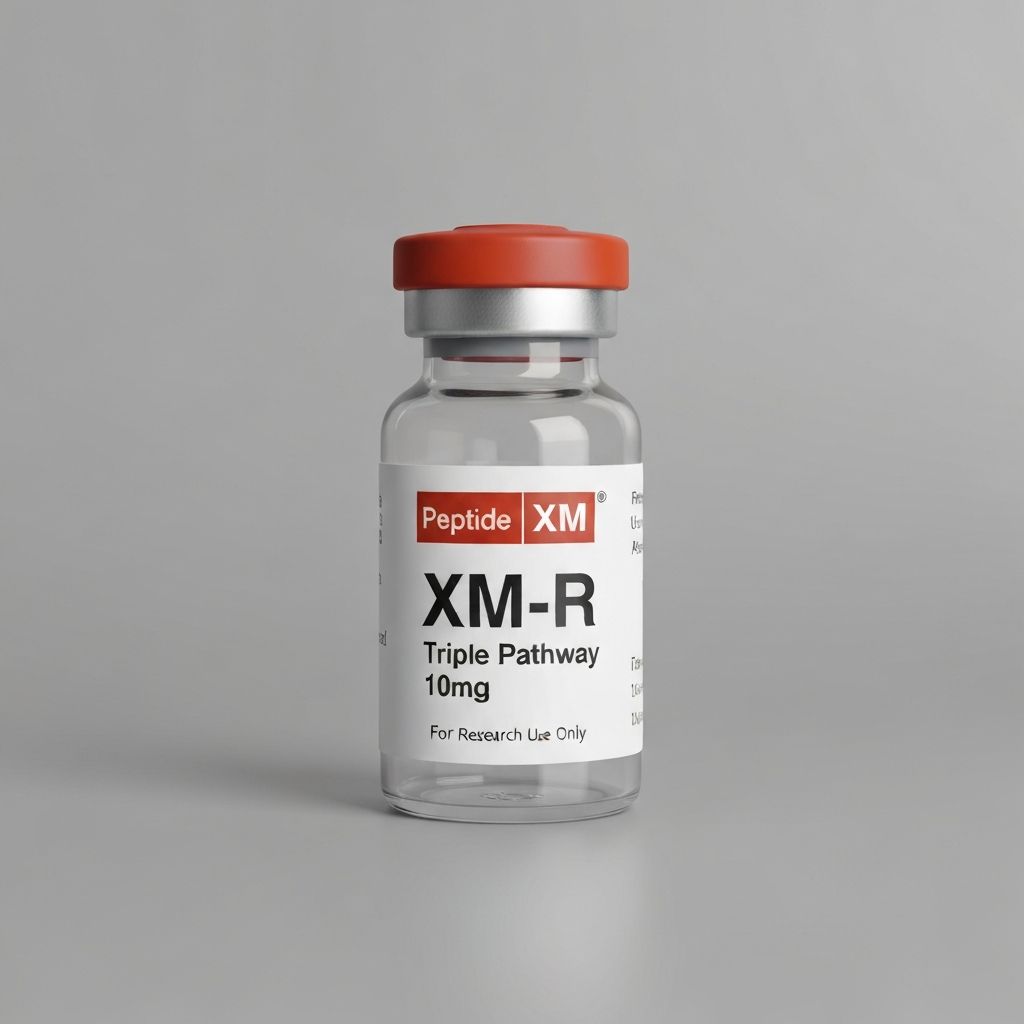
For example, strong agonists that mimic GLP-1 family activity produce marked receptor activation in vivo. In research models, overstimulation may cause reduced food intake, slowed gastric emptying, and hypoglycemia-like signs in susceptible animals — effects that confound metabolic endpoints. If your work involves a potent GLP-1 analog, keep pilot ranges narrow and document observed effects carefully.
Immune, chemical, and storage-related consequences
Excess peptide exposure doesn’t only change receptor signaling. It changes how the immune system and chemistry of your preparation behave.
Immunogenicity — repeated or high exposures can lead to antibody formation. Antibodies can neutralize activity, speed clearance, or form immune complexes that deposit in tissues. Aggregation — concentrated peptide solutions can form aggregates. Aggregates tend to be more immunogenic and can clog filters or syringes. Endotoxin-related responses — contaminated preparations (bacterial endotoxin) can cause fever, cytokine release, or sepsis-like findings in animals. Endotoxin effects are unrelated to peptide activity but are often mistaken for toxicity. Degradation products — wrong pH, multiple freeze–thaw cycles, or prolonged storage at room temperature can break peptides into fragments. These fragments may have unexpected activity or antigenicity.
Good QC eliminates many of these risks: test for endotoxin, use validated storage, and avoid high-concentration stock solutions unless stability data supports them.
How overdoses show up in experiments and how they damage data
An overdose often shows as a sudden, unexpected shift in primary or secondary outcomes. The pattern depends on the model — cell culture, acute rodent study, or longer-term cohort.
Cell culture: toxicity, decreased viability, detachment, or nonspecific staining. High peptide concentrations can interfere with colorimetric or fluorescence assays by absorbing light or quenching signals. Animal studies: rapid weight loss, reduced activity, ruffled fur, GI signs, labored breathing, sudden mortality. Subtle signs include altered food intake or shifts in metabolic biomarkers. Assay interference: excess peptide in plasma can saturate detection antibodies in an ELISA, producing falsely low or high results depending on the assay format.
When data go off the rails, you need to decide whether the result is a biological finding or an artifact from dosing error. Use objective checks before discarding a cohort.
Confirm dosing records and batch IDs. Human error in calculation or vial selection is common. Measure peptide levels in biological samples where possible. Mass spectrometry gives unambiguous concentration and metabolite information; immunoassays can be misleading when antibodies cross-react. Run endotoxin assays on stock solutions if animals show systemic inflammatory signs. Check storage logs and reconstitution notes. A mislabeled solvent or wrong volume is a frequent culprit.
Immediate lab steps when you suspect an overdose
Follow institutional policies first: contact your principal investigator (PI), veterinary staff for animal experiments, and environmental health and safety if human exposure occurred. The steps below summarize typical research-lab action.
Stop further dosing. Pause the experiment to avoid compounding the issue. Document everything. Time-stamped notes, photographed vials, and the exact lot numbers matter later for QC and reporting. Collect samples. Save aliquots of the implicated peptide batch, plus plasma/serum/tissue from affected subjects, frozen at appropriate temperatures. Notify animal-care staff if animals are affected. Veterinary teams will triage welfare and follow IACUC guidance. Run targeted QC tests. Check peptide concentration by mass spec, test for endotoxin, and confirm sterility if infection is suspected. Decide whether to suspend the study. That decision rests with the PI and oversight committees; however, don’t continue dosing until the cause is clear.
These steps protect animal welfare, preserve evidence, and limit wasted time. They also create a defensible record if you later publish or report unexpected toxicity.
Practical prevention and quality-control measures
Most overdoses are preventable. Many arise from simple arithmetic errors or poor labeling. Implement the following checks.
Independent calculation verification. Have a second researcher confirm concentration and dose calculations before preparing dosing syringes. Use small pilot ranges. A 3–5 point dose–response with narrow spacing prevents large jumps. Start low. Increase only with clear tolerance data. Prepare intermediate dilutions. Avoid making very high-concentration master stocks unless stability and endotoxin control are guaranteed. Label everything clearly. Date, concentration, solvent, and preparer initials on every tube and syringe. Maintain cold chain and proper solvent. Know which peptides tolerate saline, which need acidified buffers, and which should never be left at room temperature. Lot-level QC. For new lots, run a quick activity assay and check endotoxin before use in animals. Use validated reconstitution materials. If you routinely reconstitute peptides, keep a supply of bacteriostatic water stored for that purpose.
When data are compromised: remediation and reporting
If an overdose invalidates endpoints, treat the event as a reportable deviation in your study file. Clear documentation helps salvage what you can and prevents repeating the mistake.
Describe the event in methods or supplementary materials if the accident affects interpretation. Transparency improves reproducibility. Repeat critical experiments with corrected dosing, ideally blinded to reduce confirmation bias. Consider additional control arms. If antibody formation is suspected, add naive controls to measure neutralization. When animals were harmed, follow IACUC guidance on cohort replacement, humane endpoints, and reporting requirements. Welfare comes first.
Accurate reporting preserves scientific value. It also helps other labs avoid the same trap.
Extra note on product potency: some research analogs are engineered for strong, long-lasting receptor activity. That potency shortens the margin between effective and excessive. If your project uses high-potency analogs, treat them like high-concentration reagents — double checks at every step.
Too much peptide can break an experiment in obvious or subtle ways. Many problems are preventable with conservative pilot dosing, independent checks, and basic QC tests. When overdoses occur, prompt documentation, appropriate sampling, and involvement of oversight personnel protect subjects and preserve scientific value.