MOTS-c: a research primer on the mitochondrial peptide and anti-doping risks

MOTS‑c is a small peptide encoded by mitochondrial DNA that has attracted attention in basic research on metabolism and muscle. The literature is still early-stage, but the molecule’s origin, signalling links, and the practical and regulatory issues around it are worth noting for anyone working with research peptides.
What MOTS‑c is and how it’s thought to act MOTS‑c is a 16–amino‑acid peptide whose coding sequence resides in the mitochondrial genome rather than the nuclear genome. That places it among the growing class of mitochondrial‑derived peptides (MDPs), alongside humanin and several SHLP peptides. MDPs are small signalling molecules; primary data indicate they can interact with cellular metabolic pathways and stress responses. Mechanistically, MOTS‑c has been linked to cellular energy sensing pathways. In cell and animal models it associates with regulators of metabolism, including pathways tied to AMP‑activated protein kinase (AMPK) signalling. Those interactions are the basis for interest in MOTS‑c as a probe molecule for mitochondrial‑linked metabolism and muscle biology, not as an approved treatment.
What the preclinical literature shows (and what it doesn’t) Most published work on MOTS‑c comes from cell culture and rodent experiments. Key experimental observations include:
Exercise (in human studies with biomarkers) is reported to raise circulating MOTS‑c levels transiently, suggesting the peptide responds to physiological stressors. In several mouse studies, synthetic MOTS‑c administration correlated with changes in skeletal muscle gene expression and with improved endurance or metabolic readouts in those models. Mechanistic work in vitro points to effects on metabolic signalling networks, but the exact molecular partners and downstream consequences remain incompletely mapped.
These findings are hypothesis‑generating. They help define assays and pathways to study, but they do not establish safety, efficacy, or clinical utility in humans. The datasets are limited in scope and sample size, and translation from mice to humans is uncertain.
Regulatory and anti‑doping status MOTS‑c is not approved by the U.S. Food and Drug Administration for therapeutic use. It is commonly described on commercial sites as “for research purposes only,” but that label does not equate to regulatory clearance or legal status for human use. From an anti‑doping perspective, MOTS‑c is listed under metabolic modulators tied to AMPK activation and is prohibited in sport. That prohibition applies at all times, and because MOTS‑c lacks an approved medical indication, athletes cannot obtain a Therapeutic Use Exemption for it. Separately, MOTS‑c is not a lawful dietary ingredient and should not be marketed as a supplement. Compounding pharmacies have also been flagged by regulators regarding use of certain non‑approved bulk drug substances; institutions and labs should confirm compliance before attempting any in‑house formulations.
Safety profile, availability, and quality concerns There are no completed clinical trials that establish a safety profile for MOTS‑c in humans. Reported adverse effects come mainly from anecdotal accounts by individuals who purchased peptides online and self‑administered them; common reports include palpitations, injection‑site irritation, sleep disturbances, and transient febrile responses. Long‑term effects are unknown. Peptides sold “for research use only” are widely available through online vendors. That availability creates two practical problems for researchers: first, product quality varies substantially between suppliers; second, legal and institutional rules around purchase, storage, and use differ by jurisdiction and by research institution. A certificate of analysis (CoA) from a reputable lab is essential for any material you plan to include in experiments.
Look for lot‑specific CoAs and independent purity verification. Confirm that the supplier’s chain of custody and cold‑chain procedures meet your lab’s standards. Check institutional and local regulations before ordering, especially for substances not approved for human use.
Practical notes for researchers Use MOTS‑c only in controlled laboratory settings with appropriate approvals, and treat claims of “for research use only” as a legal label, not a safety guarantee. If MOTS‑c is part of your study design, plan for robust quality control: independent verification of sequence and purity, documentation of storage conditions, and assay validation to confirm activity in your model system. We supply research‑grade MOTS‑c alongside standard accessories often used in peptide workflows. Materials arrive with documentation intended for research use and not for human administration.
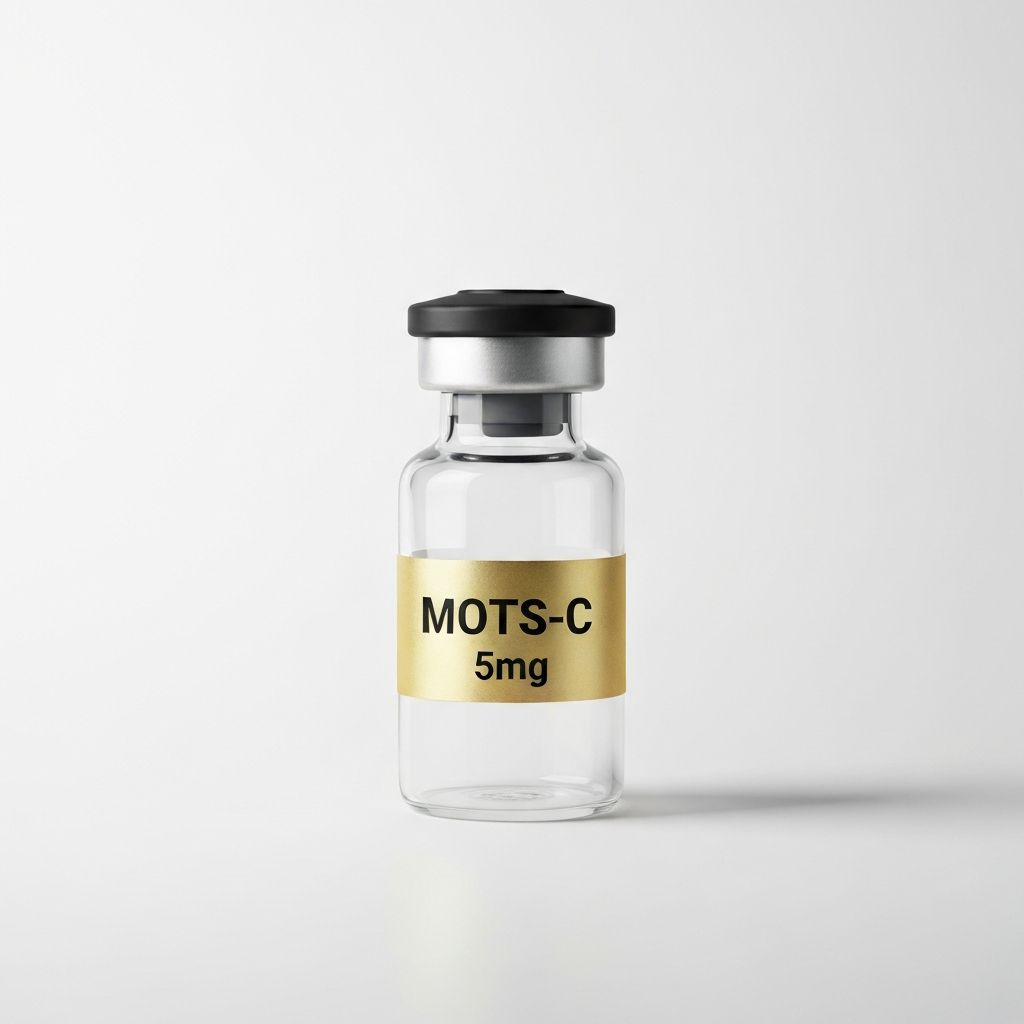

When using MOTS‑c as an experimental probe, align procurement, handling, and reporting with institutional biosafety and ethics policies. Clear documentation and transparent methods make results reproducible and defensible.
MOTS‑c is an interesting mitochondrial signalling peptide with promising leads in preclinical studies, but regulatory status and safety remain unresolved. Treat it as a research tool, verify material quality, and avoid any use outside approved laboratory protocols.