GLP-1
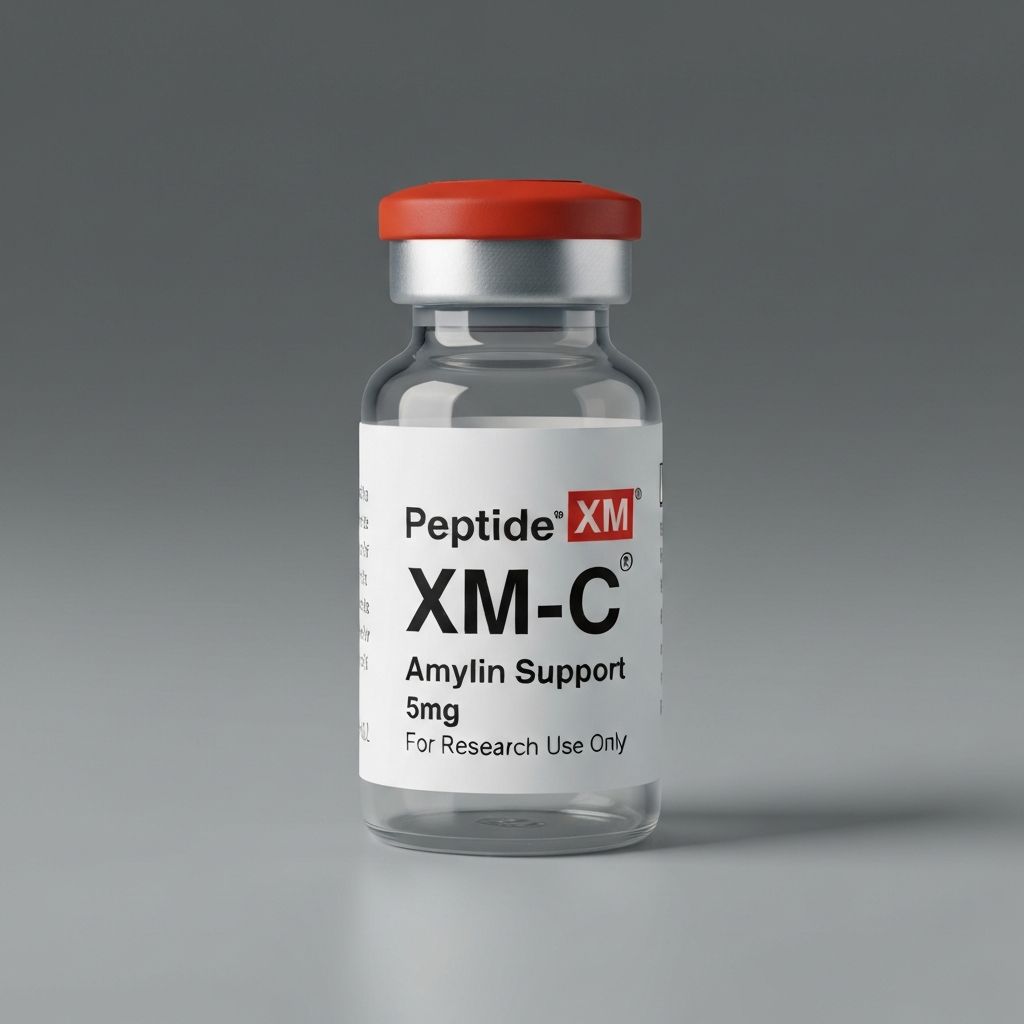
XM-C (Amylin Support)
Long-acting amylin analog for metabolic and satiety research.
View product →
GLP-1
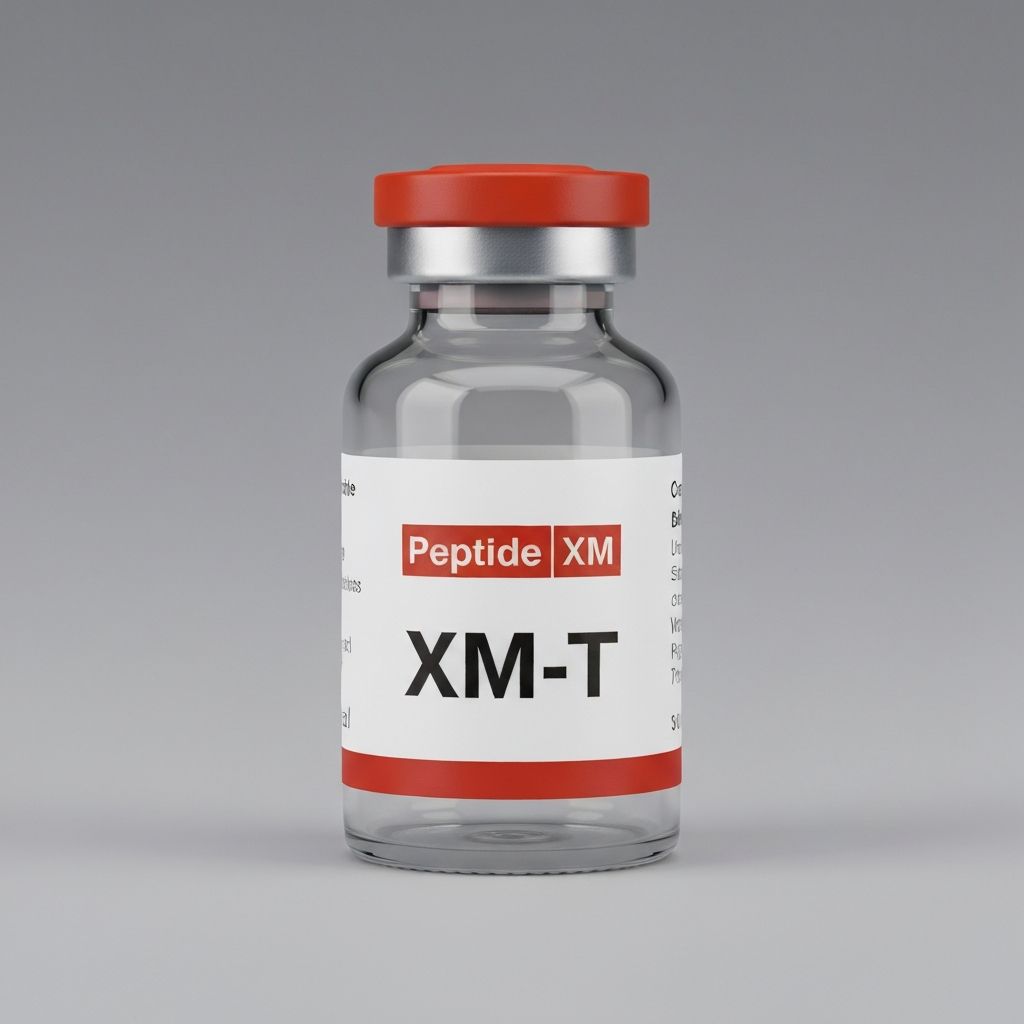
XM-T (Dual Pathway)
Dual GIP and GLP-1 receptor agonist for metabolic research applications.
View product →
GLP-1
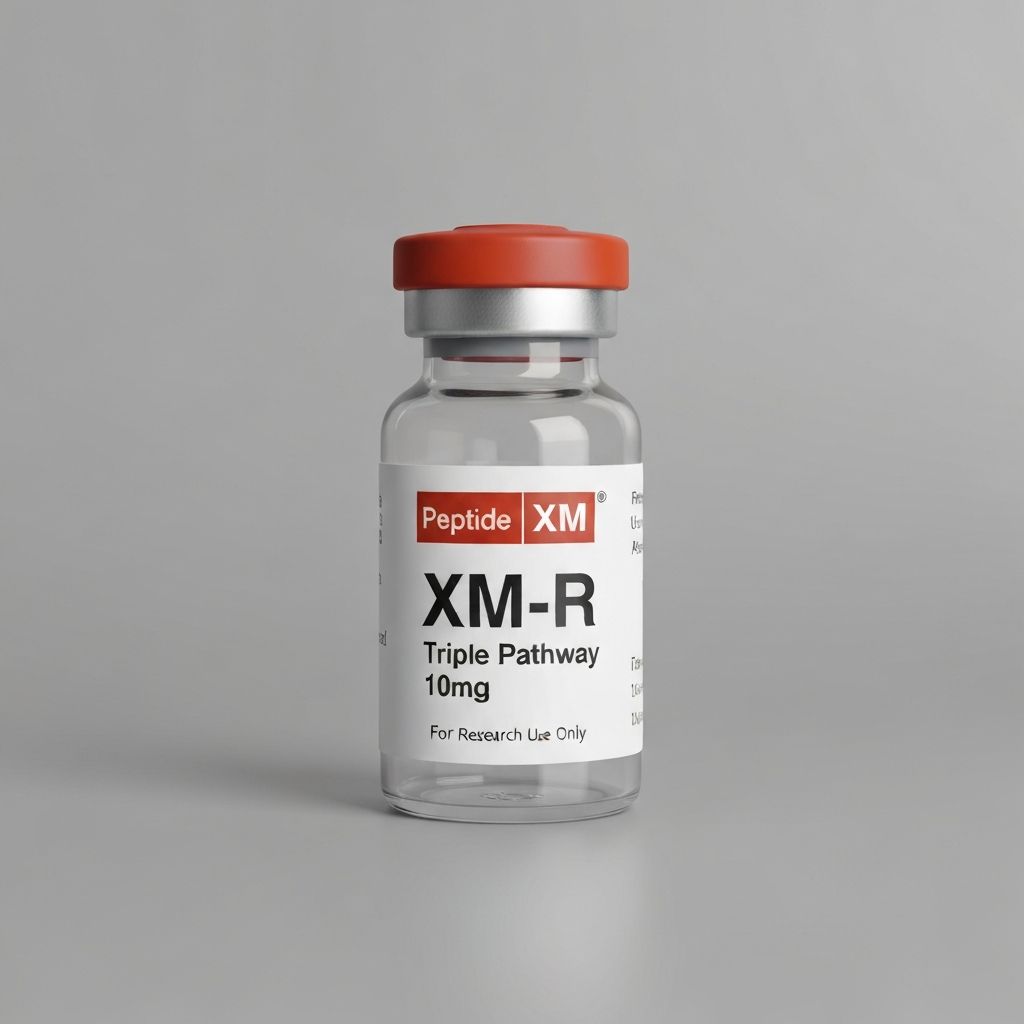
XM-R (Triple Pathway)
Triple agonist peptide targeting GLP-1, GIP, and glucagon receptors.
View product →
GLP-1 receptor agonists alter both peripheral signals and central reward circuits. That combination reduces the drive to seek palatable foods in animal models and in human imaging and behavioral studies. This post breaks the mechanisms down for researchers and suggests experimental approaches to measure craving-related changes. What GLP-1 is, and how agonists differ from the native peptide GLP-1 stands for glucagon-like peptide-1. It is a peptide hormone produced by intestinal L-cells and by a small group of neurons in the brainstem. A receptor is a protein on a cell that responds to a signaling molecule; the GLP-1 receptor (GLP-1R) is the protein that detects GLP-1. An agonist is a molecule that activates a receptor. A GLP-1 receptor agonist activates GLP-1R much like the natural peptide, but usually lasts longer and resists enzymatic breakdown. Think of GLP-1 as a brief telephone call from the gut to the body. Native GLP-1 is a short call — it ends quickly because enzymes chop it up. Agonists are like hands-free systems that keep the call going longer. That extended signal changes downstream physiology in several ways that are relevant to craving. Where GLP-1 receptors sit: peripheral sites that influence hunger signals Peripheral means outside the brain and spinal cord. GLP-1 receptors are present on several peripheral cell types that influence feeding behavior: Vagal afferents — sensory fibers in the vagus nerve that report mechanical and chemical status of the gut to the brainstem. Enteroendocrine cells and pancreatic islets — cells that shape circulating hormones like insulin and can indirectly alter energy sensing. Stomach and intestine smooth muscle — where slowed motility produces fuller sensations. These peripheral sites produce fast, graded signals. When gastric emptying slows, for example, nutrient arrival in the small intestine is delayed. That reduces the frequency of post-meal satiety spikes and alters the timing of enterohormone release. The vagus then carries a different pattern of input to brainstem nuclei that process satiety and visceral state. For craving, timing matters: longer gastric retention changes how rewarding a subsequent food cue looks to the brain. Central GLP-1 receptor populations tied to reward and craving Central means inside the brain. GLP-1 receptor expression is not uniform across the brain. Important hubs for craving express GLP-1R: Nucleus tractus solitarius (NTS) in the brainstem — a primary recipient of vagal input and an origin of GLP-1 producing neurons. Hypothalamic nuclei (e.g., arcuate nucleus) — classical appetite centers that respond to energy state. Ventral tegmental area (VTA) and nucleus accumbens (NAc) — core nodes of the mesolimbic dopamine system that encode reward and motivational salience. GLP-1R activation in each of these regions changes computations the brain makes about food cues. In the NTS and hypothalamus, the effect is more about homeostatic regulation — satiety, energy balance, and visceral state. In the VTA and NAc, activation shifts how much incentive value the brain assigns to a cue. That shift is the neural equivalent of lowering a food’s “temptation score.” How peripheral effects translate to changes in craving: a sequence of events Linking peripheral signals to subjective craving involves several steps. One simplified sequence you can test in experiments looks like this: GLP-1R agonist slows gastric emptying and modifies vagal firing patterns. Vagal inputs to the NTS alter activity in brainstem-sourced GLP-1 neurons and other projection neurons. Downstream hypothalamic and midbrain targets receive altered input and change their firing patterns and neurotransmitter release. The mesolimbic dopamine system shows lower cue-evoked responses, reducing motivation to pursue palatable food. Behavioral output: fewer approach responses, lower self-administration, lower cue-driven consumption in rodents; reduced subjective craving and cue-reactivity metrics in humans. Each step is testable. For example, you can block the vagus or use local antagonists to isolate peripheral versus central drivers. The sequence clarifies why GLP-1R drugs reduce both meal size and the motivational pull of a food cue: they change visceral state and reward computation simultaneously. Dopamine, motivation, and cue reactivity: the core of craving reduction Craving is primarily a motivational process. Motivation depends on dopamine signaling in the mesolimbic pathway — particularly dopamine neurons in the VTA and dopamine release in the NAc. GLP-1R activation reduces cue-evoked dopamine release in animal studies. That reduction lowers the incentive salience of cues — the psychological pull that makes a sight or smell trigger action. Two practical distinctions matter. First, baseline reward processing and cue-evoked responses are different things. A drug could blunt cue response without collapsing baseline hedonic capacity (liking). Second, suppression of cue-evoked dopamine often shows as reduced approach or seeking, not necessarily reduced consumption when food is freely available. Both outcomes relate to craving, but they map onto different behavioral assays. Evidence from animal models and human studies Preclinical rodent work gives tight mechanistic control. Microdialysis and voltammetry show lower dopamine transients in the NAc after GLP-1R agonists during cue presentation. Targeted infusions of agonists into the VTA reduce conditioned place preference and lever-pressing for palatable rewards. Lesion or chemogenetic silencing of vagal inputs often attenuates peripheral GLP-1 effects, which supports the gut-brain route. Human studies are smaller but convergent. Functional MRI research reports reduced activation in reward-related regions — including the striatum and orbitofrontal cortex — when participants view pictures of high-calorie foods after GLP-1R agonist exposure. Behavioral measures in controlled trials show reduced self-reported appetite and decreased ad libitum energy intake in lab test meals. Those effects often accompany slowed gastric emptying measured with breath tests or scintigraphy. Important nuance: human imaging and behavioral effects can depend on timing relative to dosing and on subject metabolic state. Acute and chronic exposure sometimes diverge. Chronic treatment can produce secondary adaptations in signaling pathways; interpreting long-term changes therefore requires repeated measures and careful controls. Agonist pharmacology: molecule properties matter Not all GLP-1R agonists are the same. Differences include molecular size, half-life, receptor potency, and whether the molecule crosses the blood–brain barrier (BBB) efficiently. Those properties change where the drug acts most strongly (periphery vs. central) and how long effects on craving persist. Two commonly used research agonists illustrate diversity in the class: Semaglutide is a long-acting GLP-1R agonist with strong peripheral and some central effects. Tirzepatide is a dual receptor agonist (it activates both GLP-1 and GIP receptors), and that profile can shift motivational outcomes compared with a pure GLP-1R agonist. When choosing a compound for experiments, consider these features: Receptor selectivity: single-target vs dual or multi-agonists change neural targets. Pharmacokinetics: peak timing and duration determine when to test cue-reactivity. BBB penetration: direct central effects require either BBB passage or robust transport mechanisms; otherwise peripheral mediation via the vagus and brainstem dominates. Designing experiments to measure craving changes Craving is multi-dimensional. Design experiments that separate motivation, consumption, and subjective desire. Use converging measures so that a single behavioral readout doesn’t over-interpret what’s happening. Behavioral assays and endpoints Suggested assays and what they map to: Pavlovian-to-instrumental transfer (PIT): tests whether a conditioned cue boosts instrumental responding. Good for cue-evoked motivation. Progressive-ratio schedules: measure how much work an animal will do for a reward — an index of ‘wanting’. Lower breakpoints after GLP-1R activation indicate reduced motivation. Conditioned place preference (CPP): assesses the rewarding value assigned to an environment; reduced CPP suggests lowered cue-associated reward. Ad libitum and limited-access feeding tests: measure consummatory behavior. Useful but can conflate satiety and motivation. Human cue-reactivity paradigms plus fMRI: pair pictures or smells with subjective craving scales and neuroimaging to link behavior to neural signals. Complement behavioral endpoints with physiological measures: Gastric emptying (breath tests, scintigraphy) to confirm peripheral effects. Vagal nerve recordings or manipulations in animals to test gut–brain mediation. Microdialysis, fast-scan cyclic voltammetry, or fiber photometry for dopamine dynamics. Receptor occupancy assays or local microinjections to disambiguate central from peripheral action. Timing is critical. If a drug slows gastric emptying acutely, test both early and later post-administration timepoints to see whether reductions in cue reactivity track the peripheral effect or appear independently. Interpretation cautions, confounds, and open questions Several confounds can mislead interpretation if left unchecked: General malaise or nausea can reduce motivated behavior. Many GLP-1R agonists produce mild nausea in rodents and humans. Pair motivation assays with locomotor and sucrose preference tests to separate nausea from decreased wanting. Weight loss itself changes metabolism and reward sensitivity. When studying chronic exposure, include pair-fed or weight-matched controls to isolate drug-specific effects from downstream metabolic changes. Dose and timing matter. Low, centrally acting doses can have different behavioral signatures than high peripheral doses that primarily change gastric physiology. Behavioral context shifts outcomes. A drug can reduce cue-driven seeking in a hungry animal but leave consummatory pleasure intact in a sated animal. Open questions remain. For example, how does receptor desensitization or biased signaling influence long-term craving suppression? What are the circuit-level adaptations after weeks of exposure, and do those changes rebound if the agonist is withdrawn? Answering these questions requires longitudinal designs with neural endpoints and careful behavioral controls. Practical lab checklist for a craving experiment Use this short checklist before you start: Define which dimension of craving you will measure: cue-evoked motivation, free consumption, or subjective wanting. Choose an agonist whose pharmacology matches your hypothesis (central penetration vs peripheral action). Plan timepoints tied to pharmacokinetics and gastric-emptying effects. Include control arms for nausea, locomotion, and weight change. Combine behavioral, physiological, and neural readouts where possible. These practical steps reduce circular interpretation and make causal claims about mechanism stronger. Final notes on safety signals and ethical research framing Research with GLP-1R agonists should track adverse-effect proxies even in animals. Reduced grooming, altered locomotion, or changes in consummatory microstructure can signal off-target or aversive effects. Report those alongside primary endpoints. All statements here are research-focused. They are not instructions for human self-administration, clinical use, or dosing. When translating preclinical findings toward clinical research, use appropriate regulatory and ethical oversight. GLP-1 receptor agonists reduce craving through a mix of peripheral bodily signals and central reductions in reward signaling. For researchers, separating those routes requires a combination of behavioral assays, physiological validation, and targeted neural measurements. Careful experimental design will reveal whether a given agonist acts mainly via the gut, the brain, or both.