Fat Loss Stack Trends (2026)
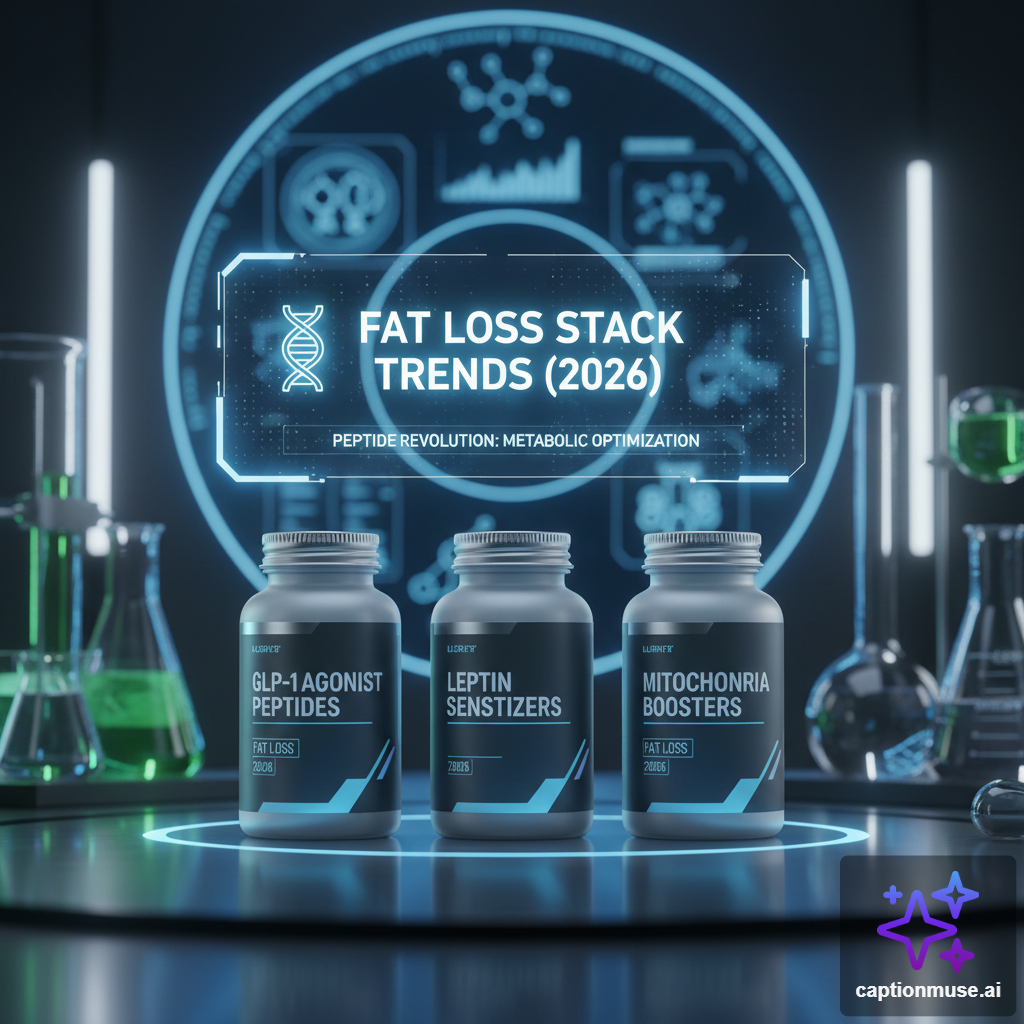
In 2026 the language around “fat-loss stacks” has shifted from single agents to mechanism-driven combinations. Researchers are testing multi-receptor peptides, metabolic adjuncts and recovery-support peptides as integrated protocols — not to recommend use, but to understand how synergistic biology might be leveraged in controlled research.
Why combination approaches are dominating the conversation Monotherapy with a GLP-1 receptor agonist moved from investigational to mainstream several years ago; the next step is integrating pathways that address appetite, energy expenditure, and tissue partitioning together. The rationale is simple: body composition is regulated by multiple overlapping systems, so combining agents that target complementary mechanisms can increase the magnitude and durability of effect in preclinical models and clinical trials. Key drivers of the 2026 trend include:
Multi-agonist molecules that act on more than one receptor (GLP-1, GIP, glucagon, amylin). Adjunct metabolic boosters and mitochondrial/anti-aging agents used to preserve lean mass and improve metabolic health. Better biomarker-guided personalization, letting researchers pair agents to participant metabolic phenotypes.
One prominent class in this area is the dual GIP/GLP-1 agonists and related multi-agonists that are being explored as backbone agents for stacks.
Popular research stacks and their mechanistic logic Several recurring stack archetypes appear in 2026 literature and investigator-initiated studies. Below are the common motifs and why researchers are testing them.
GLP-1/GIP backbone + amylin analogue: GLP-1 receptor agonism suppresses appetite and slows gastric emptying; GIP co-agonism may improve glycemic and weight outcomes in some contexts. Amylin analogues act on satiety centers and can synergize with incretin effects, potentially increasing early postprandial satiety. GLP-1 + fat-mobilizing peptides: Short peptides that modulate lipid metabolism or adipocyte function (investigational agents) are being tested to see if they augment adipose tissue lipolysis when combined with appetite suppression. GLP-1 + GH-axis support: To protect lean mass during aggressive weight-loss phases, some preclinical and small clinical studies combine incretin-based agents with growth hormone secretagogues or GH-releasing peptides to preserve muscle and lean tissue.
As an example of the amylin combination trend, researchers are studying pairings where an amylin analogue is layered on an incretin backbone to assess additive satiety and body-composition effects.
Adjunct agents: preserving lean mass and supporting recovery Significant attention in 2026 is on preserving lean mass and accelerating recovery in the context of rapid fat loss. The experimental rationale is that reducing fat mass without protecting muscle and connective tissues can worsen functional outcomes. A few classes being studied as adjuncts:
Growth-hormone axis peptides and secretagogues: Agents that stimulate endogenous GH release (GHRPs, Ipamorelin, CJC-1295 analogs, MK-677 in research settings) are evaluated for lean-mass preservation. Studies often explore biochemical markers (IGF-1, amino acid turnover) rather than hard clinical endpoints in early phases. Recovery and tissue-repair peptides: Compounds such as BPC-157, TB-500, and copper-binding peptides (GHK-Cu) are of interest for reducing inflammation, supporting tendon and connective tissue healing, and improving wound recovery in preclinical models. Metabolic/mitochondrial adjuncts: NAD+ precursors (NMN, NAD+), SS31 and mitochondrial-targeted agents are examined for resilience against metabolic stress during calorie deficit.
In research contexts the focus is often on mechanistic endpoints — e.g., protein synthesis rates, mitochondrial respiration, and marker panels — rather than direct recommendations for human use.
Safety, monitoring and the evolving regulatory landscape Combination approaches increase the complexity of safety and monitoring. In 2026 the research community is prioritizing structured safety frameworks for investigational stacks, including pre-specified biomarker panels, imaging endpoints, and pharmacovigilance plans. Practical safety considerations researchers are building into protocols:
Baseline and periodic metabolic labs (fasting glucose, HbA1c, lipid profile, liver enzymes). Body-composition measurements (DXA or bioimpedance) and muscle-function testing when lean mass preservation is a secondary objective. Cardiovascular monitoring in studies combining agents with potential hemodynamic or sympathetic effects. Adverse-event catalogs that distinguish early tolerability (GI symptoms, injection-site reactions) from longer-term signals (changes in bone markers, glucose metabolism, or organ-specific labs).
On the regulatory side, multi-agent protocols face extra scrutiny because interactions can produce emergent effects not seen with monotherapy. Investigators are increasingly documenting justification for each component, stopping rules, and preclinical interaction data where available. Important: All discussion here is for research-use contexts. This post does not endorse or recommend human dosing or off-label use.
Designing research around stacks and looking ahead Good experimental design in 2026 uses mechanistic endpoints to deconvolute combination effects. That often means layered study designs where single-agent arms are included alongside combination arms and where time-course sampling captures upstream signals (hormone levels, signaling biomarkers) before downstream physiology (weight, fat mass). Key methodological trends to consider:
Adaptive and platform trials: These allow efficient comparison of multiple combinations and dose-schedule permutations with shared control groups. Biomarker-driven stratification: Researchers are enrolling participants based on metabolic phenotypes (insulin-resistant vs. insulin-sensitive) to see whether response heterogeneity predicts which stacks work best. Short-term mechanistic studies preceding longer outcome trials: Small studies focused on substrate utilization, appetite hormones and tissue biopsies can inform which combinations merit larger trials.
Scientifically, the near-term horizon includes more multi-receptor engineered peptides (e.g., triple agonists) and better delivery formats that improve pharmacokinetics and tolerability. Those advances will influence how stacks are assembled and tested.
In summary: 2026 is the year the conversation about fat-loss compounds became about systems rather than single targets. Researchers are combining incretin-based backbones with amylin analogues, metabolic adjuncts and recovery peptides to study synergistic biology — always within controlled, monitored research frameworks. All information here is intended for research use only and not as a recommendation for human use.